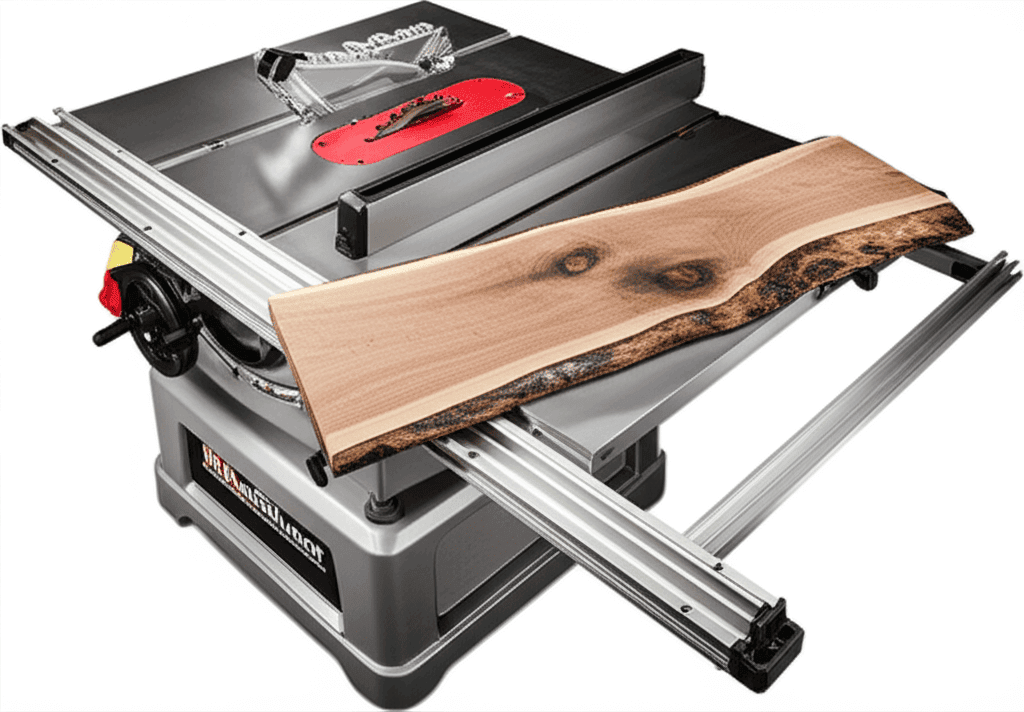
Table Saws That Can Handle More
Cutting hardwood, plywood, or large sheets can quickly wear out regular table saws. Table saws built for heavier work handle thicker wood, longer rip cuts, and tough daily tasks without breaking a sweat. Need a saw that beats basic garage jobs and stays steady on big projects? These saws bring steady power and smooth cuts, making jobs faster and easier. Knowing which saw tackles hard materials saves time, cash, and headaches. If building strong, clean cuts sounds good, learning how to choose the right saw will level up any woodworking game and keep projects on track without slowing down.
You do not need a contractor grade workshop to get serious capability. The right choice balances motor power, table stability, fence strength, and safety features so you can maintain clean cuts and reliable setup over time. Below are focused sections that explain which spec matters most and examples of real world performance so you can match a saw to your projects with confidence.
What Makes Table Saws That Can Handle More
Saws that handle more share several traits that show up in daily use. Look for an industrial style trunnion or heavy duty arbor, a motor with enough sustained power to cut dense species without bogging down, and a fence that holds parallel over long distances. A wide cast iron or steel top reduces vibration and keeps blade height steady during long rips. Combined these elements reduce chatter and yield cleaner edges.
Beyond raw specs consider workflow items such as dust collection, onboard storage for wrenches and guards, and the ease of adjusting the fence and miter gauge. A well designed saw makes repetitive operations less fatiguing and keeps your cuts consistent across a stack of boards.
Power and Motor Types That Stand Up to Heavy Work
Motor size is a key component when you need a saw to handle more. For stationary table saws intended for demanding use look for 1.75 horsepower or higher for direct drive, and 3 horsepower or more for belt driven cabinet saws. Belt drive systems generally offer smoother torque delivery and can be placed on larger cast frames which reduces vibration during long cuts.
Example numbers to compare
- 1.75 to 2.5 HP direct drive sees frequent use in jobsite or hybrid saws and cuts most hardwoods when fed at a controlled rate
- 3 HP and up belt drive is common in cabinet saws and is preferred for milling, resawing, and heavy production work
Fence Systems and Rip Capacity that Make Long Cuts Accurate
Many hobby saws have fences that wander after heavy use. Table Saws That Can Handle More typically feature T square or rack and pinion fences that lock parallel to the blade reliably. A long, stiff fence helps keep the cut line straight when ripping long boards or sheet goods. If you often work with plywood consider a fence that supports the sheet near the front edge to prevent sag during the cut.
Rack and Pinion vs T Square fences
Rack and pinion fences are fast to adjust and stay parallel over long spans which is a big benefit when cutting full sheets. T square fences can be simpler but require more attention to keep alignment true. For capacity choose a fence that extends to at least 30 inches, or add an extension wing for cutting 4 foot wide boards.
Tips for maintaining fence accuracy
- Check parallelism with a reliable straightedge or a digital caliper at both front and rear of the blade
- Keep the fence locking mechanism clean and free of dust that can cause false alignment
- If upgradeable, look for fences with micro adjustment knobs for fine tuning on the fly
Table Surface and Stability for Heavy Use
A cast iron table or a heavy gauge steel top will dampen vibration and give a steadier cut than thin stamped steel tops. Stability becomes more important when you push wide boards or run the saw for extended periods. A flat, rust free table helps the workpiece slide smoothly and keeps blade to table parallel when the blade is raised or tilted.
Practical indicators of a stable table include weight of the saw, how the saw sits on the floor, and whether the support trunnion or cabinet design keeps the arbor rigid. For mobile setups, a well constructed stand with locking wheels can make a big difference in setup repeatability each day.
Safety and Dust Collection for Demanding Jobs
When you handle more material the risk and cleanup increase as well. Look for saws equipped with anti kickback pawls, riving knives that move with the blade, and blade guards that are easy to engage and remove. A large dust port and shrouded throat plate help capture fine particles that otherwise work their way into the workspace or tools.
Practical safety considerations
- Riving knife alignment makes blade changes less finicky and reduces kickback risk
- A good dust collection connection should be at least 2.5 inches for jobsite saws and 4 inches for cabinet models to keep chips from accumulating under the cabinet
- Magnetic safety switches prevent accidental restarts after a power loss
Mobility Options and Workspace Integration
Not every workshop has the room for a large cabinet saw. Some saws provide the power and table surface necessary for bigger tasks while remaining on a mobile stand with solid lockable wheels. These hybrid models are useful when you need a flexible setup to move between job sites and home shops. If transport is common look for quick release mechanisms and robust wheel assemblies that do not flex when you roll the saw over uneven ground.
Integration into a workflow can be planned using outfeed tables, roller supports, and crosscut sleds. These accessories extend the cutting capacity and help keep stacked boards from sagging when they leave the blade.
Shop Examples and Matching a Saw to Projects
Example 1 Residential cabinet and trim work
- A hybrid saw with a 2.5 HP motor, cast top, and a rack and pinion fence works well for longer trim pieces and stair components
- Add a dedicated outfeed table to support long crown molding and stair stringers
Example 2 Small production furniture maker
- Consider a 3 HP cabinet saw if you run multiple hours per day and often resaw stock or cut thick hardwood
- Invest in a solid fence, high quality blade, and a dust system to keep tolerances steady without constant maintenance
Example 3 Job site contractor handling sheet goods
- Choose a portable saw with a robust top that resists rocking and a fence capable of supporting full sheet rips
- Look for lightweight lift mechanisms for quick blade height adjustments between cuts
Buying Checklist for Table Saws That Can Handle More
To make a practical purchase decision compare these points side by side
- Motor type and horsepower in relation to the materials you cut
- Fence system rigidity and maximum usable rip width
- Table flatness and overall machine weight which affects vibration
- Safety features including riving knife and dust port size
- Accessory ecosystem such as aftermarket fences, stands, and sleds
If you want a curated set of options that fit within a higher price range while offering features that let you handle thicker or larger stock check a focused list like this best table saws under $2000 list for models that balance capability with value.
Conclusion
Choosing Table Saws That Can Handle More comes down to matching motor capacity, fence stability, and table construction to the type of work you do most. For occasional heavy cuts a powerful hybrid with a solid fence will serve well. For daily demanding use a cabinet saw with a 3 HP motor, cast iron table, and professional fence will reduce rework and keep cuts uniform over long runs. Pay attention to safety features and dust collection since they affect both health and the longevity of the machine.
Before you buy, list the thickest material you expect to cut, the longest rip you will regularly make, and whether mobility matters. Use that list to prioritize specs and accessories. If you are upgrading from a basic saw plan for a short break in the workflow to calibrate fence alignment and blade height once the new saw is in place. That initial setup time will pay back in fewer sanding passes and cleaner joinery. Now take a look at models that meet your size and power needs and test the feel of the fence and table if you can in person. A hands on check of how the fence locks and how the saw responds under light feed will tell you more than specs alone. Ready to pick the model that fits your shop needs and budget then make the move to a saw that keeps up with your projects.